
The PoliMonitor Team's Top Political Moments of 2025
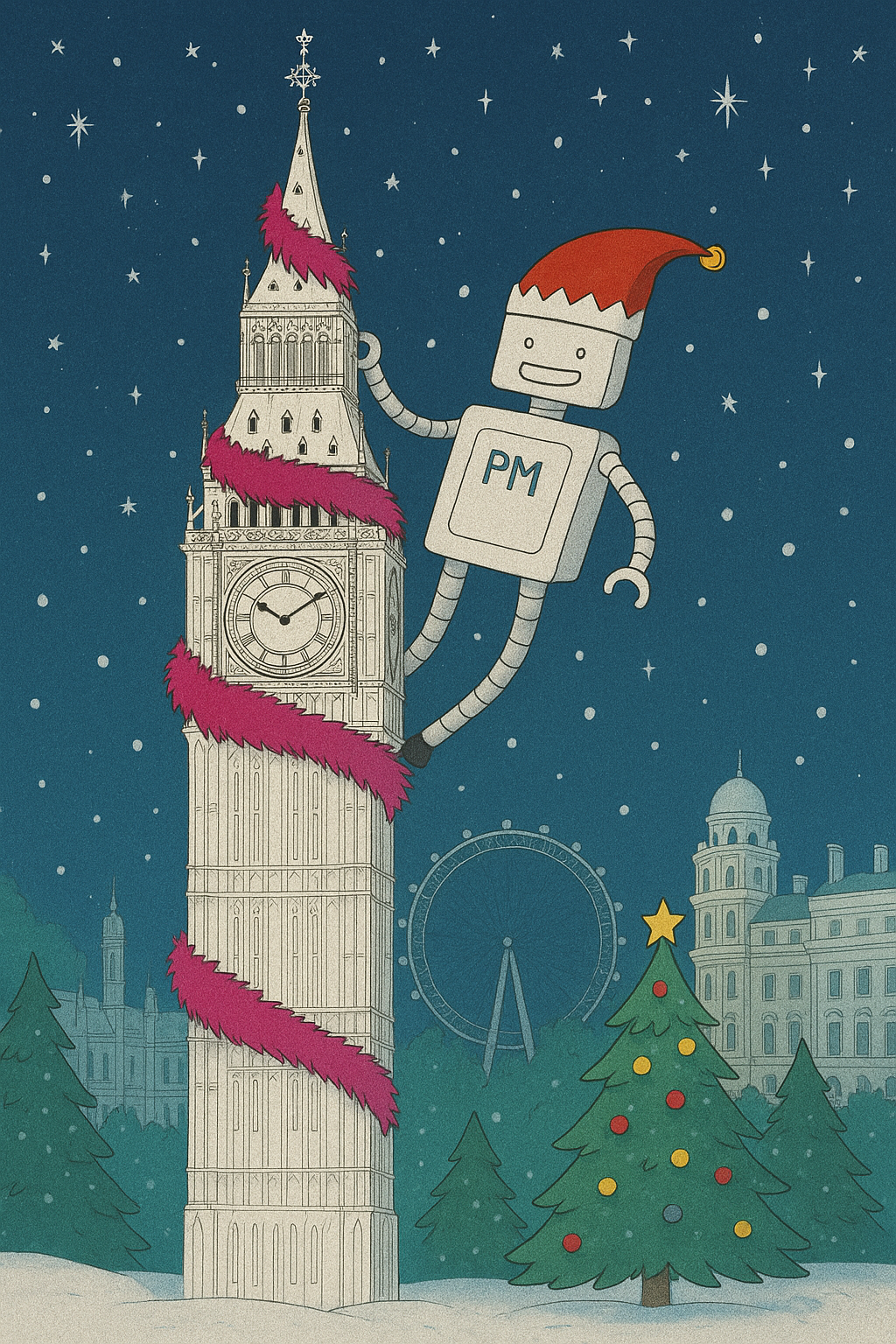
Artwork by Francesca Teare
As we head off for the festive period (and some well-earned mince pies), the PoliMonitor Team is marking the end of 2025 not with a formal review, but with a few of our personal top political moments from the year.
It’s a mix of the strategic, the unexpected, and the quietly significant, the kind of details that define a year in politics.
From all of us, a very Merry Christmas and a Happy New Year. We’ll see you in 2026 for all the briefings, speeches, and inevitable political surprises.
Thank you, as always, for choosing PoliMonitor.
Becca Mitchell, Head of Content
My political moment of the year was not a speech or a policy triumph, but a silent, televised lapse in the most basic performance of public life. Chancellor Rachel Reeves, visibly overcome, remained seated behind the Prime Minister in the Commons for 45 minutes while cameras broadcast her physical tears.
In a profession built on tightly managed optics, this was the opposite: a raw, unscripted intrusion of private feeling into the most public of spaces. The fascination wasn't the emotion itself, but the startling decision to simply endure it in full view. It was a profound departure from the choreographed stoicism we expect, laying bare the immense, isolating pressure of a role where even the simple act of stepping away can be reframed as a political signal.
The moment stood out to me precisely because it felt so profoundly human in a system that often works to sand those edges away. It was a stark, quiet reminder of the individual weight carried behind the title, not as a critique, but as an observation of the strange and often unspoken rules that govern how our leaders are permitted to be seen, or not seen, in real time.
Also, that time new Mayor for Greater Lincolnshire Dame Andrea Jenkyns wore a sparkly jumpsuit and sang “Insomnia” at the Reform UK Party Conference….
Daisy Hill, Client Services Officer
My personal, slightly bizarre political moment of the year was Shadow Justice Secretary Robert Jenrick’s stint as a Vigilante-Influencer.
His 58-second vlog, ‘Robert Jenrick takes on London’s fare dodgers’, appeared on the Conservatives’ YouTube channel in May. The video is just… him. Jogging slowly after various people at Stratford station. After being told several times (in no uncertain terms) to ‘go away’, the thrilling climax sees him triumphantly catch two boys who look about 14. He walks them over to some very bemused TfL enforcement officers, looking incredibly smug.
He then rounds it off with a seemingly random comment about the number of “weird” Turkish Barber Shops on Britain’s high streets.
The best bit? Afterwards, TfL said they “expect permission to be sought for filming of this nature.” Jenrick told LBC he hadn’t asked, because his plan would “potentially embarrass” them - the irony of which still makes me laugh, even seven months later. Arguably, it was one of the most surreal, cringeworthy and utterly memorable moments of political theatre this year.
Maiesha Umair, Client Services Officer
Zack Polanski’s visit to Clacton in September stood out to me as a rare moment of politics not being performed from a podium, but practiced with people. Instead of delivering lines to a camera or speaking only to the already-converted, he walked into a Reform-leaning town and had genuine conversations with voters who don’t necessarily share his views.
With 2025 so heavily shaped by slogans and carefully managed messaging, the political landscape has often felt pre-packaged, which is why Polanski’s trip felt like a refreshing return to the kind of politics I admire - engagement established in finding common ground, and building something less divided from there. Alongside figures abroad like the recent election of New York City Mayor Zohran Mamdani, I believe it reflects the quiet rise of the “go-outside” politician who doesn’t treat disagreement as danger, but as a starting point. My hope is 2026 brings more of this: politicians who remind us that persuasion begins with listening, not lecturing.
Alife Seymour, Content and Services Officer
If there is one issue that has plagued Prime Minister Sir Keir Starmer and his Chancellor, Rachel Reeves, this year, it has been a nagging sense that they’re not quite in control.
A series of reactionary policy decisions and U-turns, designed to soothe angsty backbenchers and contain the rise of Reform UK, has painted a picture of a Government scrambling, just as voters start looking for the politicians they feel have the gumption to fix their laundry list of problems.
What better embodiment of this than the unprecedented early release of the OBR’s Economic and Fiscal Outlook document? The document, meant to drop after Rachel Reeves finished her Budget speech, instead turned up online half an hour early, left out for journalists to find.
Except, it turns out it actually wasn’t even unprecedented.
The OBR’s own review found the same thing happened in March with the Spring Statement. The only difference last time was that nobody noticed. The best bit? It wasn’t unearthed by some digital sleuth hacking the backend but by simply changing ‘March’ to ‘November’ in the PDF link.
Not only did this moment give us at PoliMonitor a handy head start on a busy Budget day, it served as a near-perfect, and slightly farcical, encapsulation of a persistent narrative of national decline. A story of basic competence, slipping through the cracks, quite literally at the click of a link.
Toby Byfield, Operations Director
Angela Rayner’s resignation, following a scandal surrounding her stamp duty bill on the purchase of her second home, should undoubtedly be one of the defining political moments of 2025.
This was a huge moment for the Labour Government and for the Prime Minister, who lost his Deputy Leader and Deputy Prime Minister and which triggered not only a full Cabinet reshuffle, but also a new contest for the deputy leadership.
A popular figure in the Labour movement, the question is not if she will return, but rather, what her role will be in the future. Could Number 10 await the ‘Red Queen’ in 2026?
Sam Cunningham, CEO and Founder
The New Curriculum was announced in November.
While bereft of the drama of tears in Parliament or dazzle of sequins at Conference, it felt like a return to a normality of politics - a detailed announcement by a major Government Department on an important policy area for education like school curriculum. The sort of thing that doesn't seem to make headlines these days.
It was also interesting to see as a former Private Secretary and Press Officer at the Department of Education during the Labour and Coalition Governments - when I helped announce both the Rose Review of Primary Curriculum in 2009 and the English Baccalaureate EBacc in 2010 - overridden by this announcement. And with these changes not coming to force until September 2028 - it will be interesting to see how long these latest changes last in reality.
