
When does an election campaign actually begin?
By Sasha Hildyard, PoliMonitor Content Officer
In September, Reform UK received £72 million in the space of 24 hours.
The two £36 million donations, from cryptocurrency billionaires Ben Delo and Christopher Harborne, were jointly the largest donations made to a UK political party. There was one slightly unusual feature of this enormous injection of campaign cash: there was no general election campaign to spend it on.
At least, not officially.
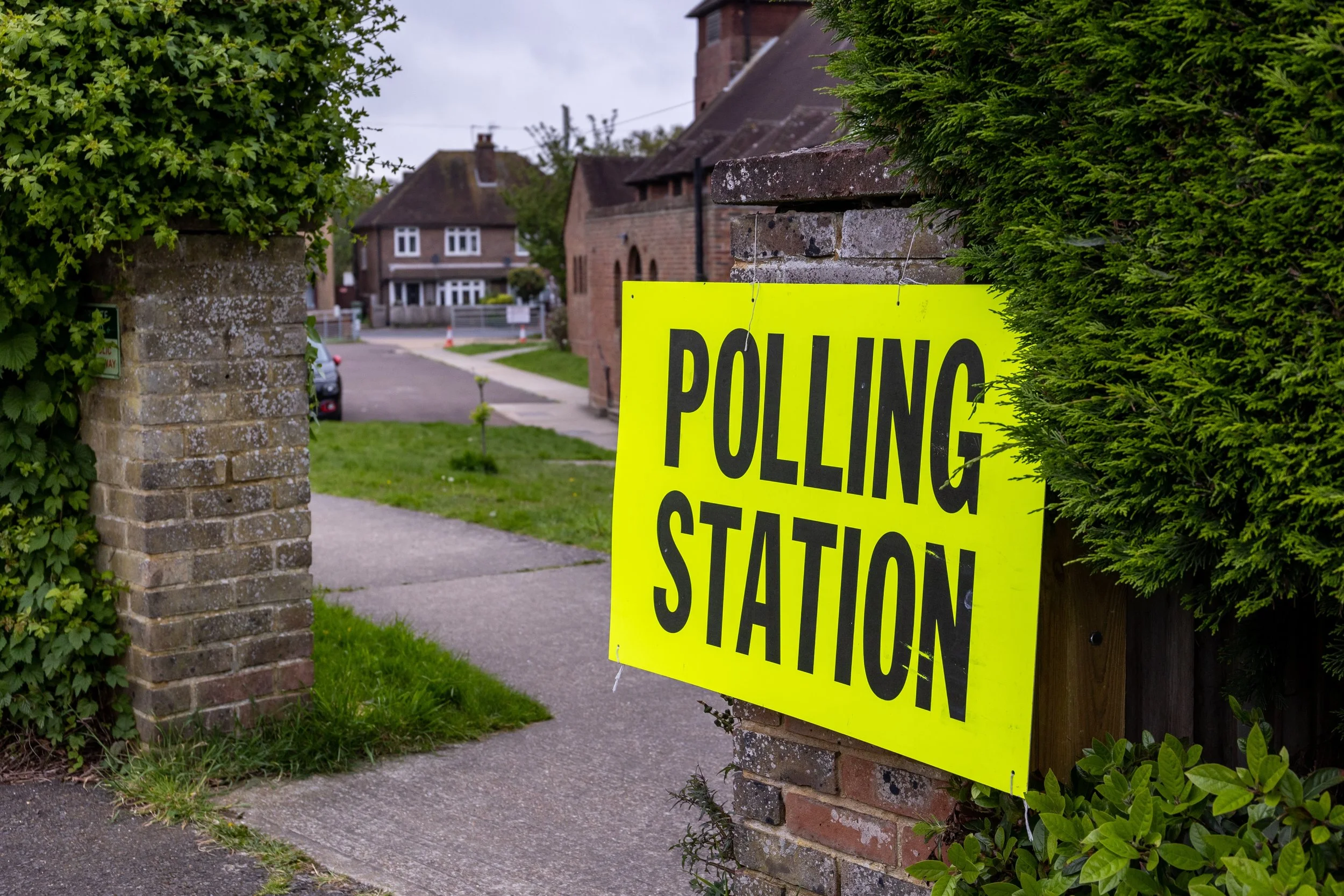
British elections still have a recognisable starting gun. Parliament is dissolved, posters appear in windows and politicians develop a sudden enthusiasm for high-vis jackets. Spending limits apply during defined regulated periods, intended to stop elections becoming a simple contest of who has the deepest pockets.
But ask when an election campaign really begins and the answer is getting considerably murkier.
A £36 million donation received years before polling day can pay for staff, technology, research and communications infrastructure. An online advert can produce a mailing list. A petition can identify potential supporters. Someone persuaded to hand over their email address today can still be receiving fundraising appeals when the battle bus eventually leaves the depot.
By then, quite a lot of the campaigning has already happened.
The permanent campaign
There is a name for this phenomenon and Britain did not invent it.
The idea of the “permanent campaign” emerged in American politics in the 1970s. Jimmy Carter’s pollster Patrick Caddell argued that maintaining public support while governing required something resembling a continuing political campaign.
The United States subsequently took the concept rather seriously. Candidates campaign because they need to fundraise, fundraise because they need to campaign, and neither side particularly wants to discover the virtues of financial restraint just as its opponent buys another month of television advertising.
Britain remains some distance from that model. It has national campaign spending limits, stricter broadcasting rules and considerably shorter formal campaigns.
What has changed is what can be built before those campaigns begin.
Digital campaigning makes the distinction particularly awkward. Money spent attracting supporters between elections can create databases and audiences that remain valuable for years. Academic analysis of the 2024 General Election found parties making extensive use of data-driven campaigning and microtargeting. The Electoral Commission has since said the statutory categories used to record campaign spending no longer give voters enough detail about modern techniques such as digital campaigning.
In other words, the accounts can tell us how much was spent without always telling us terribly much about what was built.
That matters because there is now more money around to build it.
Spending at the 2024 General Election reached a record £94.5 million, including £68.6 million by political parties. Transparency International UK has also charted the growing importance of very large donors: those giving at least £1 million accounted for 1 per cent of private contributions from individuals and companies in 2015, rising to 35 per cent in 2024.
That creates an obvious strategic problem for parties. However uncomfortable they may be with an escalating financial contest, nobody wants to be the first to put down the chequebook.
The rules were written for a different campaign
This is increasingly a problem for the people regulating politics too.
When the Political Parties, Elections and Referendums Act became law in 2000, Facebook did not exist, Twitter did not exist and TikTok was presumably still the noise made by a clock.
Twenty-six years later, Philip Rycroft’s independent review of foreign financial influence concluded that campaigning had “spilled out from the regulated period of elections to become more or less constant”. It found that there were no reporting requirements for candidate or non-party campaign spending outside regulated periods, even as political activity increasingly took place year-round.
Foreign influence adds another complication. Foreign donations to British political parties are restricted, but influencing British politics does not necessarily require paying money into a party bank account. Political material can be funded overseas and distributed online, while non-party organisations can campaign on issues that become part of the electoral contest.
Rycroft therefore recommended looking beyond the traditional question of who gives money to political parties. His proposals included greater year-round transparency, restrictions on foreign-funded political advertising and clearer identification of who is paying for online political material.
Some of that thinking is already making its way into law.
So where does the new Bill draw the line?
The Representation of the People Bill, which is now awaiting its Lords Committee Stage, would tighten the rules around political donations. Among its provisions are a £100,000 annual cap on donations from overseas electors and a moratorium on political donations made using cryptoassets. It would also introduce stricter eligibility requirements for companies making political donations.
Those changes address questions about where political money comes from.
The permanent campaign poses a slightly different one: when does campaign spending begin?
There is still no general cap on how much a permissible domestic donor can give. Nor would the Bill simply bring everything a political party does between elections inside general-election spending limits.
That distinction is important. A huge donation does not establish that influence or a political favour has been bought. What a large donation can do is give a party the resources to build political capacity years before voters enter a polling station.
Possible solutions bring problems of their own. A donation cap could reduce parties’ reliance on a small number of wealthy supporters, but deciding where to set it would immediately become politically contentious. Lower spending limits could restrain the financial arms race, while potentially benefiting organisations that already possess large supporter networks and infrastructure. Greater public funding would mean asking taxpayers to subsidise political parties, including ones they might ordinarily cross the road to avoid.
There is no obvious way of taking money out of politics altogether. Political parties need staff, offices, research, advertising and ways of speaking to voters. Democracy, inconveniently, has overheads.
The more interesting question is whether the rules still describe the political contest they are supposed to regulate.
British election law remains heavily focused on the period when an election is visibly under way. Yet the databases may have been assembled, the staff hired, the audiences found and the fundraising operation built long before anyone puts on a rosette.
By the time the high-vis jackets come out, the campaign may already be years old.
