
Two years on: the manifesto authors have left the building
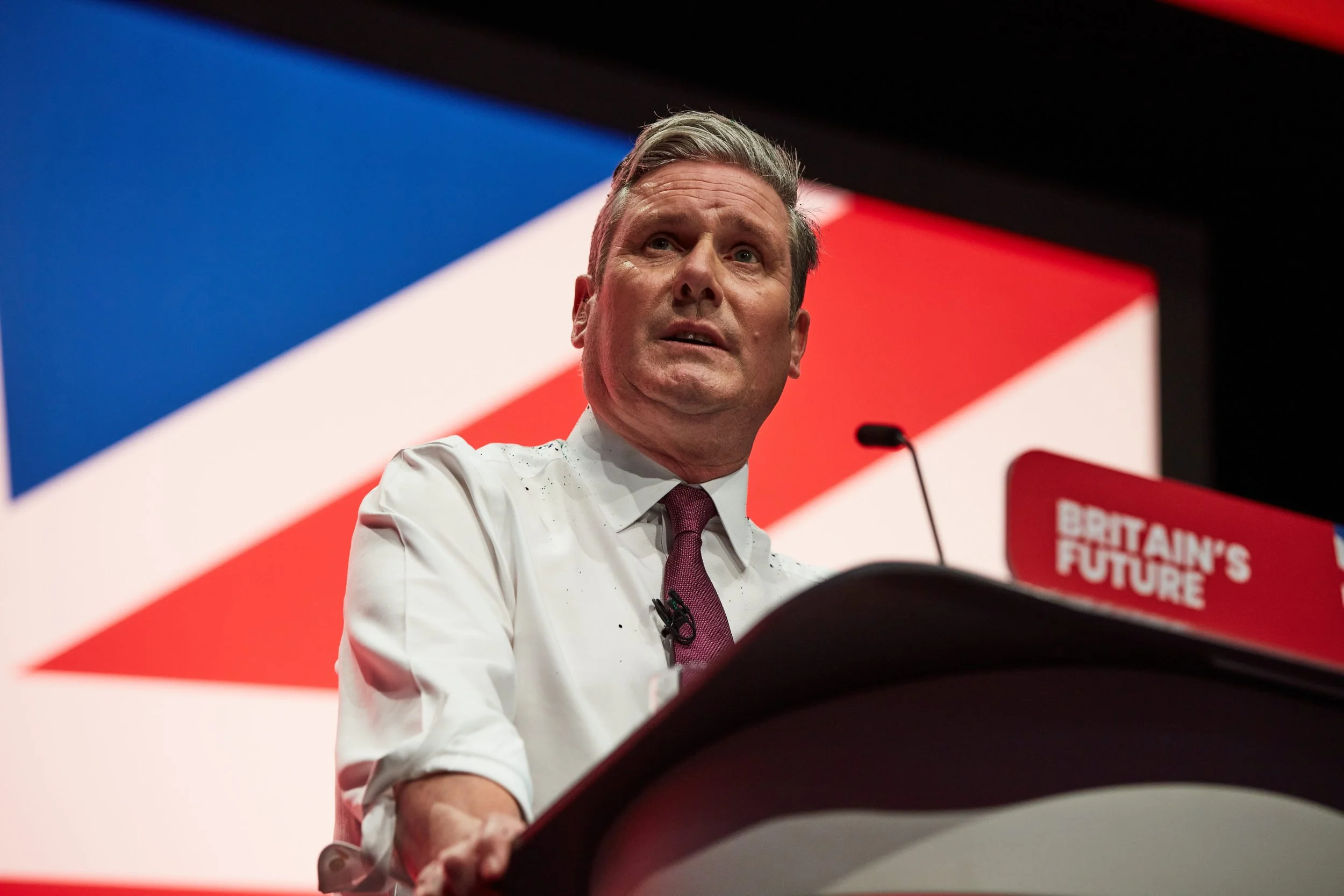
Labour's 2024 manifesto was called, simply, "Change". As we approach the two year anniversary of the 2024 election of this Sir Keir Starmer Government, that title has arguably aged into something closer to an accidental punchline.
The change that may have landed hardest in Westminster isn't any single policy, it's that almost every layer of the machine meant to deliver the manifesto has changed instead: the elected government, the political operation around the Prime Minister, the permanent civil service underneath both of them and most recently, the Prime Minister himself.
That's worth taking seriously as a structural finding, not just an accumulation of news stories, because it's rare for all to turn over heavily at once. Usually the component of the permanent civil service can be expected to hold steady while the others shift. Here, none have. To discover whether built relationships in each layer of the political machine remain firm, it is first necessary to analyse the events which brought us here.
Layer one: the elected reckoning
This is the layer that gets covered as politics, and it has been substantial enough on its own.
Angela Rayner's resignation last September, over unpaid stamp duty, triggered a reshuffle that changed half the cabinet. That was the precedent for what's happened since: Defence Secretary John Healey resigned over inadequate funding for the Defence Investment Plan, followed by his junior minister Al Carns, both citing barely any sustained access to the Prime Minister across two years. In May, Health Secretary Wes Streeting resigned saying Starmer could not lead Labour into the next election, careful not to confirm his numbers. He was right about the outcome if not the mechanism: Starmer later resigned without the formal threshold ever being reached. Safeguarding minister Jess Phillips resigned the same week as Streeting, her letter describing a year of pushing for child safety measures that only moved once an unrelated scandal forced Number 10 to act.
The Burnham situation is the clearest sign of how informal this reckoning has become.
Andy Burnham could not stand for Parliament while mayor of Greater Manchester, so a sitting MP, Josh Simons, resigned his own seat specifically to create a vacancy for him. The same party machine, Starmer's own vote among them, had blocked Burnham from doing exactly this elsewhere four months earlier. By May, no-one blocked it. That's not a contest with a timetable. It's pressure finding a route around the formal process because the formal process wasn't built to register it.
That manoeuvre has produced its result: Starmer has resigned and Burnham is the frontrunner to succeed him, having entered Parliament without ever being formally selected through the party's usual processes.
Layer two: the political operation
Underneath the cabinet sits the smaller, less visible team which actually runs Number 10 day to day, and it has turned over just as heavily, in a way that's structurally different from layer one.
Cabinet ministers who resign mostly stay in politics: on the backbenches: in a leadership race or somewhere reachable. The political appointees around the Prime Minister mostly don't. Sue Gray lasted not quite 100 days as chief of staff before Morgan McSweeney replaced her; McSweeney himself resigned in February 2026 over the fallout from Peter Mandelson's ambassadorial appointment. The communications operation has been rebuilt repeatedly: Matthew Doyle out in March 2025, his successors Stephanie Driver and James Lyons both gone by September, their successor Tim Allan gone by February. Number 10 is currently being run by two joint chiefs of staff rather than one. And it’s all waiting to be changed again with the likely move of Manchester to its centre.
PoliMonitor's own live database of Number 10's special advisers makes the scale concrete rather than impressionistic.
Sixty-two people have formally held a post inside Number 10's Private Office, Press Team, Political Team, or Policy and Briefing Unit since July 2024. Twenty-one, more than a third, have already left. The sharpest individual case is Ravinder Athwal, who personally directed the writing of the manifesto itself, the actual 136-page document called "Change". He's gone. The unit he ran is now led by someone with no connection to drafting the commitments it exists to deliver. The manifesto's authors didn't just leave Number 10. In at least two areas, nobody officially replaced them.
That's the practical reading worth taking from this layer: when a special adviser leaves, the relationship usually leaves with them, since there's rarely anywhere else in government for them to land. A contact list built from this layer in 2024 isn't just outdated, it's largely unrecoverable by simply finding out where that person went next.
Layer three: the civil service
This is the layer that gets the least coverage and arguably is most important, because it's where institutional memory is supposed to live regardless of which party is in office. It hasn't been spared either, and the churn here behaves differently again, less like people leaving the system and more like the same small, senior pool being rapidly reshuffled within it, which matters for how recoverable any given relationship actually is.
Simon Case left as Cabinet Secretary in December 2024 on health grounds. His successor, Chris Wormald, had been the longest-serving permanent secretary in Whitehall at the time of his appointment, the most experienced candidate available, and he still lasted barely fourteen months before departing in February 2026 amid briefings that he was being forced out, the shortest tenure of any Cabinet Secretary on record. For the better part of a day afterwards, the government could not confirm who actually held the post: three permanent secretaries, Antonia Romeo from the Home Office, James Bowler from the Treasury, and Cat Little from the Cabinet Office, were jointly appointed as interim caretakers until Romeo was confirmed a week later as the first woman to hold the role in its 110-year history. The single most senior, most stable job in the British state was, briefly, unfilled and unclear, even to the people running the country.
The pattern repeats at department level.
The Foreign Office's top official, Philip Barton, left in early 2025; his successor Olly Robbins was sacked in April 2026 after his department became embedded in the security vetting decision on Mandelson's appointment; the role is currently held on an interim basis, three different people in roughly fifteen months.
At Defence, David Williams left the civil service entirely after thirty-five years, most recently as permanent secretary, in October 2025, taking with him three and a half decades of institutional knowledge about how that department actually works.
And at the Department for Work and Pensions, Sir Peter Schofield, in post since 2018 and the civil servant who delivered the Universal Credit rollout, announced he's stepping down this July after a select committee criticised the department's handling of the carer's allowance overpayment scandal, another thirty-five-year career ending on the same kind of "time with family" framing Whitehall has used throughout this period. His replacement, Dame Sarah Healey, isn't an outsider, she's moving sideways from running MHCLG, which now needs a permanent secretary of its own.
That's the second pattern worth naming precisely: it's a small senior pool being reshuffled among itself, meaning a relationship with a departing permanent secretary is sometimes recoverable simply by following them to wherever they land next, which is a meaningfully different proposition from chasing a special adviser who's left government for good.
Giving evidence to the Public Administration and Constitutional Affairs Committee earlier this year, Romeo was asked directly what had been learned from the Mandelson vetting failure. Her answer named the gap precisely: weak record keeping, inconsistent vetting, and decisions tracked through non-corporate communication channels rather than the formal record. Two reviews follow directly from that, one into those channels, one into vetting, with a revised Ministerial Code expected by autumn. Of everything in this piece, those two reviews are arguably the single highest-value thing to track going forward, not because they'll settle the politics, but because they're the first attempt to rewrite the formal rules for how decisions get made and recorded across exactly the period this churn has covered. Whoever shapes their conclusions will effectively be setting the operating procedure for the rest of this Parliament, whoever leads it.
Three reckonings, one government
Put the three layers next to each other and the picture is more specific than an accusation of "this government has been chaotic".
The elected layer is mid-reckoning over its own leadership. Number 10's own political appointee layer has lost more than a third of its people, including the author of the manifesto. The permanent civil service layer has burned through two cabinet secretaries, three Foreign Office chiefs, and two of its most senior, longest-serving department heads, mostly by reshuffling the same small pool of people into each other's old jobs. Any one of those would be a normal, survivable story for a government to tell. Together, they describe a state that's had to relearn how to run itself three times over, by three different mechanisms, while also trying to deliver on the document that got it elected.
The leadership itself has now changed by the same logic, not through a formal contest but through pressure finding the path of least resistance, which is the pattern this piece has been describing throughout.
Two years ago the cover said "Change". It wasn't wrong. It perhaps has just turned out to describe the personnel more so than the policy and, in the end, the person on the cover too.
