
How to engage with APPGs
Alfie Seymour
Speaking at a Liberal Democrat Conference fringe panel last year, the Vice-Chair of the All-Party Parliamentary Group (APPG) for Fair Elections, Lisa Smart, said that the APPG was a chance for her to press on an issue that was separate from her work representing her constituents and her role as a party spokesperson. It was a frank insight into the way MPs approach APPGs, and suggests that membership is a useful indicator of their interest in any given topic.
The perpetual challenge for all public affairs professionals is finding the right audience for their message at the right moment. APPGs can be one of the best avenues for this. According to the latest register published on 29th June, there were 571 active APPGs in Parliament, and this number has grown substantially over the last several decades.
APPGs have also become an increasingly visible part of Parliamentary debate in recent years. As the graph below shows, mentions of All-Party Parliamentary Groups have rapidly risen in the last ten years. Since the 2024 election, the phrase “All-Party Parliamentary Group” has been recorded 1,645 times across the Commons and the Lords, per Hansard. So what do they do, and how do organisations connect with them?
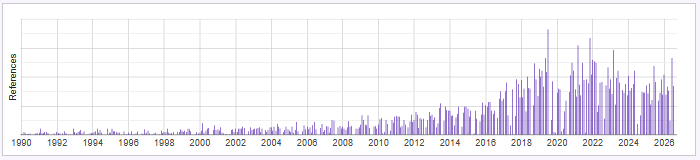
Hansard data showing the increased use of the phrase “All-Party Parliamentary Group” since 1990.
What are APPGs?
APPGs are cross-party organisations made up of members from the House of Commons or the House of Lords. Though they need to be registered, APPGs have no formal powers to influence parliamentary business. The register categorises them by “Country, Area or Region Groups” and “Subject Groups”. It is in the latter category where an eclectic array of groups can be found on everything from space to Shakespeare.
APPG work typically takes place in the form of formal meetings (of which two, including an AGM, must be held every year), inquiries, visits, and reports. Most meetings will have guest speakers invited to discuss the policy area, and this can often include Ministers. The schedule for meetings the following week is sent by the Whips’ Office on Monday.
What rules govern APPGs?
In 2023, the House of Commons Committee on Standards, then chaired by the current Northern Ireland Secretary, Chris Bryant, proposed a new set of rules which were agreed to by the Commons. The changes created a two-tier regulation system for APPGs, with groups that receive over £1,500 in “registrable financial and material benefits” required to publish an annual activity report outlining their work, while their AGMs must be chaired by an MP nominated by the Speaker who is not a member of the APPG, and have at least eight Members of either House present, compared to the usual five. In addition, all APPGs must now publish an annual income and expenditure statement (even if income is zero), and secretariats can no longer be provided or funded by foreign governments.
Beyond these changes, APPGs must be chaired by an MP and have four officers, who can be from across both Houses. One of these officer roles must be filled by a member from the government party, and another by the opposition, and there must be at least 20 members. They are also subject to restrictions around how they communicate their activity, to avoid creating the impression that the group reflects the overall view of the House of Commons or Lords.
How to engage with APPGs:
APPG meetings are free to attend, though public access may vary. Some require registration ahead of time and some sessions might only be open to parliamentarians or those specifically invited to speak, so it’s worth contacting the APPG’s registered contact or secretariat to both connect and ensure you can attend. Parliament security guidance states that those without a Parliamentary pass require an invite to attend.
The average meeting that isn’t an AGM will typically see a pre-selected topic discussed, with policy experts, senior officials and even Ministers invited to speak on the issue. Attending these events provides an opportunity to make the issues your organisation faces known to the stakeholders attending.
Inquiries also make up a key part of APPG work. Much like Select Committee inquiries, APPGs will typically seek out written evidence submissions from experts in their respective fields to help shape their findings. The challenge here lies in understanding the scope of the inquiry and how to link your work to the questions those leading it are looking to address. Some, such as this from the Health APPG, offer detailed questions for respondents to answer on specific policy niches. Others are less prescriptive, such as this call for evidence from the APPG on Migration, which simply asked for how the Home Secretary’s immigration White Paper will impact four key areas of immigration policy. What links all of them together, though, is usually the inclusion of several key themes the inquiry is looking to address. Ensuring your response matches these themes is vital.
As with all political engagement, a key element of building a relationship with APPGs is understanding what work they are undertaking and how your organisation can contribute. This is especially important for APPGs covering extremely broad topics. At any given time, the APPG for Health could be covering any one of a dozen topics. In 2025 alone, the group held events on brain injury data, Integrated Care Boards, and obesity prevention. This breadth of potential topic areas means that having the political intelligence which allows you to understand where attention is currently focused is essential before any attempt at engagement.
Beyond this, understanding which issues connect with the politicians involved is also key. For many MPs, their choice of APPG is likely to be closely linked to a significant issue in their constituency. As the below graph from Hansard shows, “my constituency” has become an increasingly prevalent phrase in the House of Commons since the last election. Politico’s London Influence newsletter reported last year that a growing number of Labour MPs are looking to establish themselves as local champions in order to insulate themselves from the ebbs and flows of national politics.
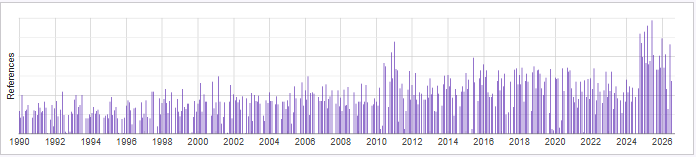
Hansard data showing the increased use of the phrase “my constituency” since 1990.
For those looking to engage, whether it is reaching out to members of an APPG, or even trying to convince MPs to join, this means that finding a direct link between your work and an MP’s constituents could be crucial. Finding a specific appeal to each MP is worth it if it means that your briefing catches the attention of an MP or their staff, rather than being discarded alongside the hundreds of other generic briefings and correspondence they receive. If you’re from an energy company, which MPs have major infrastructure projects being built in their constituency? If your focus is housing, which MPs live in areas with the most pressures on supply? PoliMonitor’s service allows you to do this by surfacing the information you need to make this targeted approach effective.
The number of APPGs has grown in recent years, providing new avenues through which to engage, but volume without the right filter is just noise. PoliMonitor provides that filter, ensuring you receive the specific political intelligence which allows you to make informed, targeted approaches to APPGs that get your issues put on the agenda. Our weekly APPG email flags all meetings in the next week linked to the issues important to you, while our monitoring and CRM platform allows you to find and reach out to the people that matter.
