
Do MP defections actually matter?
Blog by Alfie Seymour, PoliMonitor’s Content and Service Officer
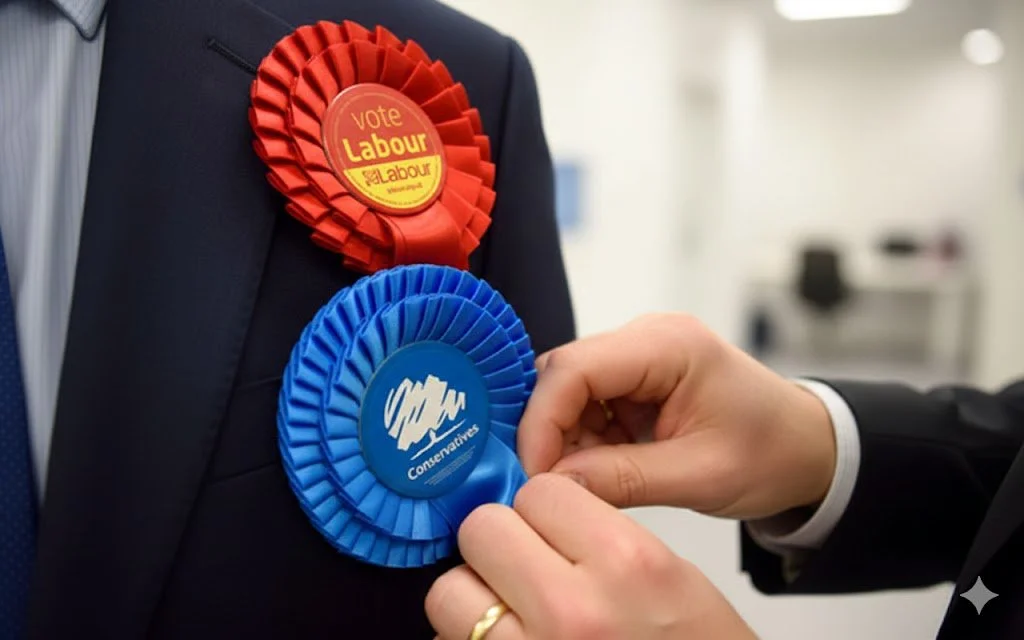
Defections are a rare occurrence in parliamentary life, but when they take place, they almost always make a splash.
The decision of a sitting MP to break ranks and switch over to a party they have likely spent years trying to beat always strikes a chord in Westminster. The images it conjures of quiet conversations, grand plotting and vicious betrayal make the idea of defections one Westminster can’t help but indulge.
Most recently in Parliament, Danny Kruger became the latest MP to move across, or in this case, along the benches, having moved from the Conservatives to Reform UK. In a letter to his constituents, he expressed his dissatisfaction with Conservative “failures” on immigration and Brexit. This year has also seen Zarah Sultana, suspended from the Labour Party last July after voting to scrap the two-child benefit cap, officially leave her party to form Your Party with Jeremy Corbyn. Beyond those confirmed to have departed for pastures new, there are consistent rumours of Conservative MP switching to both Reform and the Lib Dems, while Green Party leader Zack Polanski has claimed that “multiple” Labour MPs are considering joining his “eco-populist” movement.
Polling suggests political defections have a generally negative perception amongst the British public. Ipsos reported in May 2025 that 40% of Britons view it as unacceptable for an MP to defect to another party, compared to 25% who believe it is acceptable. The polling also found that there was no combination of two parties involved in a defection which would make the public view a politician more favourably.
Leaving a party can bring substantial professional and personal consequences for MPs.
The major UK parties are institutions that can make choosing to move away to a less established party, or one not in Government, a risk. It risks alienating thousands of the voters who brought them to Parliament in the first place, as well as friends and colleagues.
For Danny Kruger and any other Conservative MPs thinking of joining Reform, much encouragement will be taken from the defection of Lee Anderson in early 2024. Though Anderson joined Reform after he lost the whip in the Conservative Party, his decision to join Reform rather than sit as an Independent was a significant moment, giving the party its first MP. In the 2024 election that followed, Anderson increased his personal vote share by 3.5%, while Conservative support in the seat dropped by 31%. Though far from a significant sample, the result suggested that voters are willing to tolerate changes of allegiance to Reform, and given Anderson’s role in the party’s formative moments, he would likely expect a high-ranking cabinet position should Reform ever come to power.
Also successful in switching sides in recent years was Christian Wakeford. The first Conservative MP to switch to Labour since 2007, Wakeford left the Conservatives in 2022 over the partygate scandal. Similarly to Anderson, he was able to slightly increase his personal vote share in 2024 by 1.8%. After the election he was appointed as an Assistant Whip, before being promoted to a Whip during the September 2025 reshuffle.
After any defection, discourse inevitably turns to the question of whether MPs should even be allowed to change their party outside of an election season. Typically, the argument hinges on whether MPs should be seen as delegates who represent the views of their constituents in spite of their personal views, or as a trustee who has the freedom to choose how to produce the best outcomes for their constituents. MPs are voted for as members of a particular party, so for some, the decision to change their allegiance means they are arguably betraying the will of voters. Contrastingly, most defectors would likely argue that they are continuing to represent the interests of their constituents in Parliament.
Even so, polling from YouGov in 2022 also found that 69% of the population believe that an MP defecting should trigger a by-election. Ironically, Wakeford did not trigger a by-election after his defection, despite supporting a Private Members’ Bill in 2020 which would have made the practice mandatory. Following Kruger’s recent defection, MPs from across the political spectrum reposted a GB News clip of Nigel Farage criticising Wakeford for failing to call a by-election. Kruger told the media that he will "continue to be the MP that I was elected to be at the last election" and would "vote exactly the same way that I've voted since the Labour government came in".
It’s understandable that MPs are reluctant to risk their standing in a by-election upon defecting; not only does it put their livelihood at risk when there is no procedural pressure on them to do so, but their newfound parties will be acutely aware of the optics of an embarrassing loss in a by-election. That said, the last two MPs to trigger by-elections after defecting, Douglas Carswell and Mark Reckless, who both defected from the Conservatives to UKIP, successfully retained their seats in by-elections, albeit with reduced margins of victory. Carswell retained his seat in the 2015 election before standing down ahead of the 2017 General Election, while Reckless lost his seat to the Conservatives in 2015 by more than 14% of the vote.
The launch of Your Party has been one of the more farcical stories in Westminster this year, with uncoordinated announcements, a false membership launch and animosity at the top of the party spilling into public view. While nobody can be quite sure what will become of Your Party, the recent history of MPs defecting to form their own parties is chequered at best. In 2019, a series of Labour, Conservative and Liberal Democrat MPs resigned their whips to join Change UK in protest of the response of the major parties to Brexit. In total, 11 MPs joined the upstart party, though by the general election the following December, six had left. At the election, every one of the MPs who initially joined, including those who stood for other parties, either didn’t stand or lost their seat.
So why do MPs choose to pack up their bags and jump ship to the other side of Westminster?
Political historian Dr Alun Wyburn-Powell notes that defections often reflect wider political trends, rather than creating the trend themselves. Defections in recent years have acted as an indicator of the way dissenting sects of parties are positioning themselves on key issues. The defections of Carswell and Reckless can be seen in the context of a Conservative Party struggling to contain the rising influence of UKIP, while the (brief) existence of Change UK can be attributed to the discontent from liberal wings with the positions of the major parties on Brexit. Recent defections further reflect this, with Kruger marking a key part of Reform UK’s efforts to reposition itself as the major right-leaning party in the UK, while the rise of Your Party reflects the discontent from the left with the direction of the Labour Party under Prime Minister Sir Keir Starmer.
Perhaps the most dramatic defection in recent times, Natalie Elphicke walking across the floor ahead of PMQs to join Labour from the Conservatives, meant little from a Parliamentary perspective. She defected to Labour on 8th May, just 22 days before Parliament was dissolved on 30th May, and chose not to stand at the election that followed.
For most, the real value in a defection will stem from the headlines it generates.
Kruger had been touted as one of the next generation of Conservative MPs who could pull the party out of electoral oblivion, so his defection marked a significant statement of intent for Reform UK, while significantly increasing his chances of attaining a cabinet position in the coming years. Despite Kemi Badenoch finding her feet somewhat in recent months as Leader of the Conservatives, rumours persist that big names in her party could still defect to Reform UK. If/when the first Labour MP defects to a revitalised Green Party, it will no doubt be followed by headlines about Sir Keir Starmer losing control of the party.
In most Parliaments, one MP changing which lobby they walk through is unlikely to turn an opposition into a Government, but it will almost certainly create a wave of buzz that their newfound political home will try to ride into electoral success.
